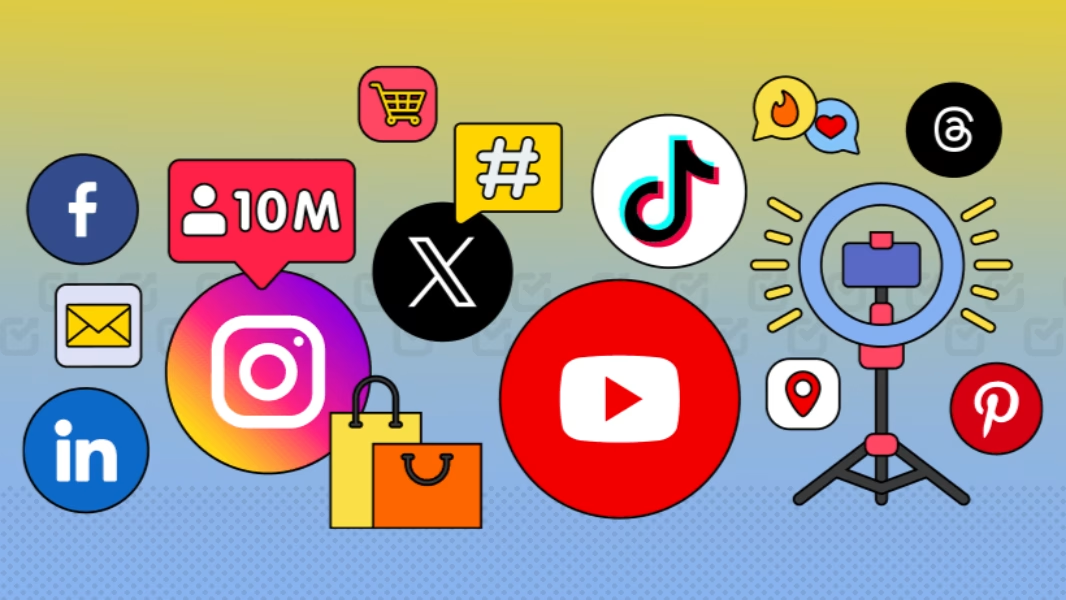
Social media has transformed communication from something that primarily happened through face-to-face conversations, telephone calls, letters, and email into an experience that can take place instantly across digital platforms. Today, people can share messages, photographs, videos, opinions, and live updates with audiences around the world within seconds.
Communication Has Become Instant
One of the biggest changes brought by social media is speed. A person can send a message or publish an update and potentially reach thousands or millions of people almost immediately.
Breaking news, personal announcements, business updates, and cultural trends can spread rapidly. Instead of waiting for traditional communication channels, people can participate in conversations as events happen.
Instant communication has made the world feel more connected, particularly for friends and family members who live far apart.
Visual Communication Is Growing
Social media has also changed the way people express ideas. Communication is no longer limited to written words.
Photographs, short videos, livestreams, GIFs, emojis, graphics, and other visual formats are now common parts of everyday conversations.
Visual content can communicate emotions or ideas quickly. A short video may explain something that would otherwise require several paragraphs of text.
This shift has also encouraged businesses and organizations to develop more visual communication strategies.
Short-Form Content Has Changed Attention
Short-form content has become an important part of social media culture. Users can scroll through a large number of posts or videos within a short period.
This has encouraged creators and brands to communicate ideas quickly and attract attention within the first few seconds.
While short content can make information accessible and entertaining, it can also make complex subjects more difficult to explain. Important issues sometimes require context and detailed discussion that cannot easily fit into a brief post.
Social Media Connects Global Communities
Geographical distance is less of a barrier to communication than it once was. People can connect with individuals who share their interests, professions, hobbies, or experiences regardless of where they live.
Online communities can bring together people interested in subjects ranging from education and technology to sports, entertainment, travel, and business.
These connections can help people exchange knowledge, discover new perspectives, and build professional or personal relationships.
Businesses Communicate Directly With Customers
Social media has significantly changed business communication. Companies can interact directly with customers rather than relying entirely on traditional advertising and customer-service channels.
Businesses can announce new products, answer questions, respond to feedback, share educational content, and address customer concerns.
This direct communication can make brands appear more accessible. At the same time, it means businesses must respond carefully because public conversations can influence their reputation.
Personal Branding Has Become More Important
Social media has also changed how individuals present themselves professionally. Entrepreneurs, freelancers, artists, professionals, and creators can use online platforms to demonstrate their knowledge and build a personal brand.
Instead of relying solely on traditional resumes or professional networks, individuals can showcase their work through posts, videos, portfolios, and educational content.
A strong digital presence can help people discover professional opportunities, although users should remain aware that public content can remain accessible for a long time.
Communication Is More Interactive
Traditional media generally involved a one-way flow of information. Social media is much more interactive.
People can comment on posts, share content, ask questions, create responses, and participate in discussions. A single post can become the starting point for a large conversation.
This interaction gives audiences a more active role in communication. However, discussions can also become confrontational when people have strongly different opinions.
Social Media Influences Language
Digital communication has created new expressions, abbreviations, memes, and communication styles. Emojis can convey emotions, while hashtags can organize conversations around particular subjects.
Language can also change rapidly as online communities develop new expressions and trends.
This evolution demonstrates how technology can influence everyday communication and culture.
Challenges of Social Media Communication
Despite its benefits, social media also creates challenges. Information can spread quickly without being accurate. Misleading headlines, manipulated images, edited videos, and rumors can influence public opinion.
The lack of tone in written messages can also lead to misunderstandings. A comment intended as a joke may be interpreted differently by someone reading it without additional context.
Privacy is another important consideration. Users should think carefully before sharing personal information, photographs, locations, or sensitive details publicly.
The Future of Digital Communication
Artificial intelligence, augmented reality, improved video technology, and other innovations are likely to continue changing online communication.
AI-powered tools may make content creation and translation easier, while new technologies could make digital conversations more interactive and immersive.
However, technology alone will not determine the quality of communication. Digital literacy, critical thinking, empathy, and responsible online behavior will remain important.
Final Thoughts
Social media has fundamentally changed the way people communicate. Messages can travel instantly, visual content has become increasingly important, and individuals can participate in conversations with audiences around the world.
The technology offers opportunities to connect, learn, promote businesses, build communities, and share creative ideas. At the same time, users need to recognize the risks associated with misinformation, privacy, misunderstandings, and excessive use.
The most effective approach is to use social media thoughtfully. When people combine the speed and reach of digital platforms with responsible communication habits, social media can become a powerful tool for meaningful connection.